⏱️ Reading time: 6 minutes
In this article
If you've spent any time in a salon in the last decade, you've heard about keratin treatments. Sleek, frizz-free, shiny hair, the promise is compelling. But there's something the glossy before-and-afters don't always tell you: most of those treatments work by chemically altering your hair structure using formaldehyde or its derivatives. And the results, while dramatic at first, often leave hair weaker, more dependent, and more brittle over time.
There's a fundamentally different approach, one that doesn't force your hair into submission, but actually rebuilds it. It's called vegetal keratin, and it's been the cornerstone of Mon SHAMPOING's formulas since day one.
Here's everything you need to know.
What is keratin, really?
Keratin is the structural protein that makes up approximately 95% of your hair fiber. Think of it as the scaffolding, it gives hair its strength, elasticity, and ability to withstand daily stress like brushing, heat styling, and environmental exposure.
Healthy hair has a high keratin content with an intact cuticle (the outer protective layer) that lies flat, reflecting light and keeping moisture locked in. When that structure is compromised, through heat, chemical processing, UV exposure, or aggressive products, the keratin breaks down, the cuticle lifts, and hair becomes dry, brittle, dull, and prone to breakage.
Replenishing keratin is therefore one of the most effective ways to restore hair health. The question is: how you replenish it matters enormously.
The problem with chemical keratin treatments
Traditional keratin treatments (Brazilian blowouts, smoothing treatments, and similar salon services) don't actually add keratin to your hair in a meaningful biological sense. What they do is use heat and chemicals (most commonly formaldehyde-releasing compounds) to temporarily seal the hair cuticle and smooth the fiber into a straighter, shinier shape.
The results look great. For a few weeks.
But here's what happens underneath:
🔬 Formaldehyde exposure: the FDA and multiple occupational health agencies have flagged formaldehyde, present in many keratin treatments under names like methylene glycol, formalin, or methanal, as a known carcinogen. Salon workers who apply these treatments regularly face documented health risks. Clients are exposed too, particularly during the heat-activation process when fumes are released.
🔄 The dependency cycle: because chemical treatments work by coating and sealing rather than genuinely rebuilding, the hair doesn't get stronger, it gets dependent. Each treatment leaves the natural structure slightly more depleted. The gap between treatments shortens. The hair looks increasingly dull without its chemical "fix."
💸 The cost: professional keratin treatments in the US typically run $150–$450 per session, with results lasting 3–5 months. That's a significant investment for a treatment that may be weakening the very thing it claims to strengthen.
⚠️ What to look for on ingredient labels
Formaldehyde in hair products doesn't always appear by that name. Watch for: methylene glycol, formalin, methanal, timonacic acid, or any ingredient ending in "-aldehyde." If a product promises to dramatically smooth or straighten hair with heat activation, it likely contains one of these.
What makes vegetal keratin different
Vegetal keratin, also called plant-based keratin or hydrolyzed vegetable keratin, is derived from plant proteins (most commonly wheat, soy, or corn) that have been broken down into amino acid chains closely resembling those found in human hair keratin.
The key word here is resembling. Because vegetal keratin is hydrolyzed (broken into smaller molecules), it can actually penetrate the hair cortex rather than just coating the surface. It doesn't mimic the shape of straight hair, it replenishes the building blocks your hair uses to repair and strengthen itself.
The difference in philosophy is fundamental:
- Chemical keratin = overrides your hair's natural structure temporarily
- Vegetal keratin = works with your hair's natural structure progressively
No formaldehyde. No heat activation required. No dependency cycle. Just consistent, cumulative rebuilding with every wash.
How vegetal keratin actually works in your hair
When you use a shampoo or conditioner formulated with hydrolyzed vegetal keratin, here's what happens at a molecular level:
1. Penetration: the hydrolyzed keratin molecules, small enough to pass through the cuticle, enter the cortex of the hair shaft, where structural damage typically occurs.
2. Bonding: these amino acid chains bond to the damaged sites within the keratin matrix, filling gaps and reinforcing weakened areas. It's similar in principle to how a protein treatment works, but with molecules that are structurally compatible with your hair's own keratin.
3. Cuticle smoothing: as the internal structure becomes more uniform and reinforced, the cuticle lies flatter naturally, not because it's been forced into position, but because the fiber underneath it is healthier. This is why vegetal keratin produces smoother, shinier hair without the dramatic chemical straightening effect.
4. Cumulative effect: unlike a one-time salon treatment, vegetal keratin builds up over repeated use. Week 4 of your routine will show more results than week 1. The hair gets genuinely stronger, not just temporarily coated.
Who is vegetal keratin for?
The honest answer: almost everyone benefits from it, but it's particularly transformative for certain hair profiles.
✅ Color-treated or chemically processed hair: bleach, dye, and relaxers all degrade the keratin structure significantly. Vegetal keratin is one of the most effective ways to restore integrity to chemically compromised hair without layering on more chemicals.
✅ Heat-damaged hair: regular blow-drying, flat ironing, and curling degrades the hair's protein bonds over time. Vegetal keratin progressively rebuilds what heat styling strips away.
✅ Fine or fragile hair: fine hair has less keratin by volume and breaks more easily. Replenishing it with plant-based keratin adds resilience without adding weight, a key distinction, since many strengthening treatments leave fine hair flat and heavy.
✅ Curly, coily, and textured hair: textured hair is structurally more vulnerable at the points where the hair bends, these are the sites where breakage most often occurs. Vegetal keratin reinforces these areas without altering curl pattern or requiring heat activation.
✅ Anyone wanting to transition away from chemical treatments: if you've been relying on salon keratin treatments and want to break the cycle, a vegetal keratin routine is the most effective bridge, it maintains results while allowing your natural structure to recover.
💡 Managing expectations
Vegetal keratin won't dramatically straighten your hair or produce overnight transformation, and that's by design. What it will do is make your hair measurably stronger, smoother, and more resilient after 4–6 weeks of consistent use. Think of it as building a healthier baseline, not applying a filter.
Why vegetal keratin is at the heart of Mon SHAMPOING
When I created Mon SHAMPOING, I was frustrated by a gap in the market that I kept bumping into: the products that actually worked were full of ingredients I didn't want on my hair or in the water system. And the "clean" products were often beautiful in concept but weak in results.
Vegetal keratin solved that tension for me. It's genuinely effective, not as a compromise, but as a superior approach to hair strengthening. It's plant-derived, biodegradable, and free from the health concerns associated with formaldehyde-based treatments. And because it works progressively with every wash, it fits seamlessly into a daily routine rather than requiring a salon appointment every few months.
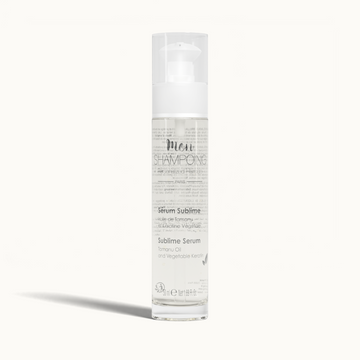
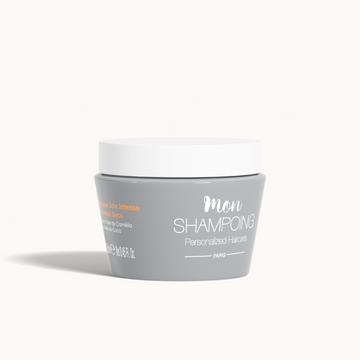
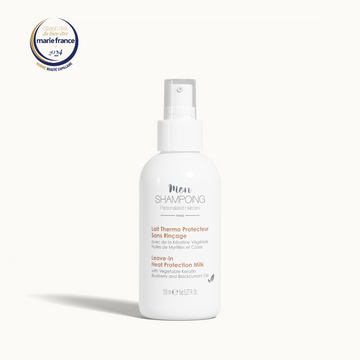
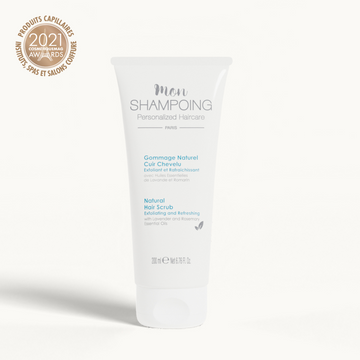
Every Mon SHAMPOING formula, shampoo, conditioner, mask, leave-in, contains hydrolyzed vegetal keratin as a base active. It's not a marketing claim on the front of the bottle. It's in the formula, every time, doing the work.
Combined with our customization system, where you choose the essential and vegetable oil booster matched to your specific hair type and concern, the result is a routine that's both genuinely clean and genuinely effective. That combination is rarer than it should be in 2025.
"I built Mon SHAMPOING around one question: what would I actually want to put on my hair, knowing everything I know about formulation? Vegetal keratin was the obvious answer. It respects the hair's biology instead of overriding it. The results take a little longer, and they last a lot longer too."
- Patricia Debrant, founder of Mon SHAMPOING
Ready to try vegetal keratin for yourself?
Start with our hair quiz, it takes 2 minutes and matches you with the exact shampoo and booster combination for your hair type, concern, and goals. No salon appointment needed.
Frequently asked questions about vegetal keratin
Is vegetal keratin the same as a keratin treatment?
No, they are fundamentally different. A keratin treatment is a salon service that uses heat and chemical compounds (often formaldehyde-based) to temporarily smooth and straighten hair. Vegetal keratin is a plant-derived protein ingredient used in everyday hair care products that progressively rebuilds the hair's structural integrity from within. One is a one-time chemical intervention; the other is an ongoing rebuilding process.
Will vegetal keratin straighten or loosen my curls?
No. Vegetal keratin does not alter your hair's natural curl pattern. It strengthens the fiber and smooths the cuticle, which can reduce frizz and make curls appear more defined and less puffy, but it does not chemically or physically change the shape of your curl. Your natural texture is preserved and enhanced, not overridden.
How long does it take to see results from vegetal keratin in shampoo?
Most people notice an improvement in texture and manageability within 3–4 weeks of consistent use. Significant structural improvement, measurably less breakage, more elasticity, smoother cuticle, is typically visible after 6–8 weeks. The results are cumulative, meaning they continue to improve as long as you maintain the routine, rather than fading after a few weeks the way a coating treatment does.
Is vegetal keratin safe for color-treated hair?
Yes, and it's actually one of the best ingredients for color-treated hair. The bleaching and dyeing process degrades keratin bonds and lifts the cuticle, which is why color-treated hair fades faster and feels more brittle over time. Vegetal keratin helps repair that damage without interfering with color molecules. Mon SHAMPOING formulas are sulfate-free and silicone-free, which also means they won't strip color or create build-up over your treatment.
What's the difference between hydrolyzed keratin and regular keratin on an ingredient list?
On an INCI ingredient list, you'll see "hydrolyzed keratin" or "hydrolyzed vegetable protein" for the plant-based version. "Hydrolyzed" means the protein has been broken down into smaller peptide chains that can penetrate the hair shaft rather than just coating its surface. Non-hydrolyzed keratin molecules are too large to enter the cortex, they sit on the outside of the fiber and wash off easily. Hydrolyzed vegetal keratin is the form that actually delivers structural benefits.
Your hair deserves better than a chemical shortcut. Give it what it's actually made of.
With love,
Patricia