Article updated on June 23, 2026 ⏱️ Reading time: 6 minutes
In this article
Summer is here, bringing sun, vacations, and of course... fabulous hair! But if you've ever made it to Labor Day with hair that feels like straw and looks like it's lost a fight with a pool filter, you know the reality isn't always that glamorous.
The good news: summer hair damage is entirely preventable, and largely reversible, with the right approach. The key word being "right." Most conventional summer hair products rely on silicones to mask damage rather than address it. Once you understand what's actually happening to your hair between Memorial Day and Labor Day, a much simpler and more effective routine becomes obvious.
Why summer wrecks your hair: the science
Your hair faces a specific set of aggressors every summer, and they compound each other in ways that make the damage accumulate faster than any other season.
☀️ UV radiation: just like UV rays break down melanin in your skin, they break down melanin in your hair, which is why hair lightens over summer. But UV also degrades the surface proteins of the hair fiber, lifting the cuticle and making hair porous, dull, and increasingly prone to breakage. Unlike skin, hair cannot repair UV damage from within. Every affected strand stays compromised until it grows out.
💧 Dehydration from heat: high temperatures cause direct moisture evaporation from the hair shaft. Air conditioning then strips whatever moisture remains. If you live somewhere like Phoenix, Las Vegas, or Dallas, where summer heat is extreme and AC is aggressive, your hair is cycling through dehydration continuously, every single day.
🌊 Salt water: sea salt pulls moisture out of the hair fiber through osmosis and roughens the cuticle surface. It creates that "beachy texture" people sometimes seek out, but extended exposure without rinsing leads to brittleness, tangling, and breakage, particularly at the ends.
🏊 Chlorine: the most damaging summer aggressor for many Americans, and the one most often underestimated. More on this below.
The chlorine problem: America's biggest summer hair issue
Pool culture in the US is genuinely unique. From backyard pools to community pools to hotel pools to water parks, Americans spend more time in chlorinated water than almost any other population in the world. And chlorine is particularly aggressive on hair for reasons that go beyond simple dryness.
Chlorine is an oxidizing agent. It doesn't just coat the hair, it reacts with the proteins inside the hair fiber, breaking down the keratin bonds that give hair its strength and elasticity. It also oxidizes melanin, which is why blonde hair can turn greenish and brunette hair can take on a brassy tone after a summer of regular pool use.
For color-treated hair, chlorine accelerates fade dramatically, sometimes stripping weeks of color vibrancy in a single swim. For natural hair and textured hair, it causes the cuticle to lift and tangle, making already-fragile hair significantly more prone to breakage during detangling.
💡 The pre-swim trick that changes everything
Wet your hair with fresh water before getting in the pool. Hair is like a sponge, if it's already saturated with fresh water, it absorbs significantly less chlorinated water. Follow with our Leave-in Sun Spray applied to damp hair before swimming for an additional protective barrier. Two minutes of prep prevents hours of damage.
Protect first, repair second
The most efficient summer hair strategy is protection, because preventing damage is always easier and faster than reversing it. Just as we've all internalized SPF for skin, hair deserves the same proactive approach.
What good hair sun protection does:
- Creates a barrier between the hair fiber and UV radiation
- Helps repel salt and chlorine particles before they penetrate the cuticle
- Maintains natural moisture levels throughout the day
- Preserves color vibrancy for color-treated hair
The key active ingredients to look for, and the ones at the core of the Mon SHAMPOING solar range:
🌿 Plant-based keratin: strengthens the hair structure and guards against sun damage. It restores elasticity, maintains hydration balance, and forms a protective shield against external aggressors, ensuring hair health even with prolonged sun exposure.
🌸 Orange blossom essential oil: soothes the scalp, prevents sun-induced irritation, and maintains scalp balance for healthy, resilient hair throughout the summer.
🫒 Marula vegetable oil: rich in antioxidants and essential fatty acids, it deeply hydrates and shields hair from sun damage without weighing it down, leaving hair feeling light and fresh even in heat and humidity.
The complete summer hair routine
Before sun or water exposure, protection
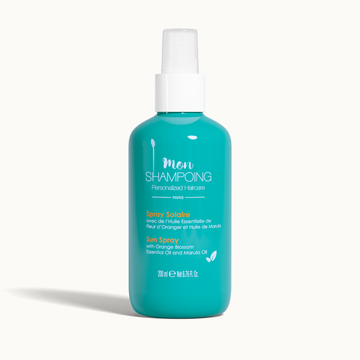
Apply our Leave-in Sun Spray throughout the day to create a protective barrier, moisturize your hair, and keep it feeling fresh. Reapply after swimming, towel-drying, or whenever you feel your hair drying out. Think of it as your hair's SPF, consistent reapplication matters.
💡 Humid vs. dry summer climates
If you're in a humid coastal environment (Miami, New York, Houston), your biggest challenge is frizz on top of UV damage, your leave-in spray is your most important daily step. If you're in a dry heat environment (Phoenix, Las Vegas, LA), moisture evaporation is the primary concern, lean more heavily on the Sun Mask after each wash to rebuild hydration reserves.
After swimming or sun, rinse immediately
Never let salt or chlorine dry in your hair. A fresh water rinse within 30 minutes of getting out of the ocean or pool prevents the majority of the chemical damage from setting in. This single habit, which takes about 30 seconds, is one of the most impactful things you can do for your hair all summer.
On wash days: the solar cleanse
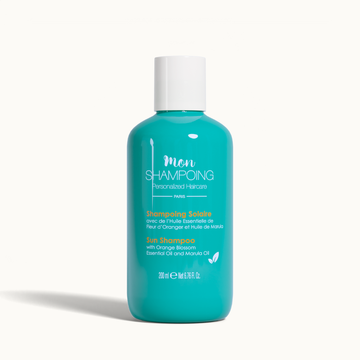
Use our Sun Shampoo to gently cleanse hair of salt, chlorine, and styling residues while maintaining scalp balance. Unlike regular shampoos, it's specifically formulated to dissolve mineral and chemical deposits from pool and ocean water without stripping the natural oils your hair needs in summer.
After washing: deep repair
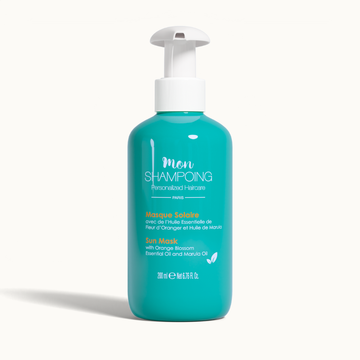
Apply our Sun Mask to lengths and ends for deep hydration and intense repair of sun-damaged hair. Leave for a minimum of 10 minutes, actually time it, because the repair ingredients need contact time to work. Rinse with cool water to seal the cuticle. In summer, the mask goes from weekly to every wash, and nobody should apologize for that.
The natural ingredients that actually repair summer damage
There's a meaningful difference between ingredients that mask summer damage and ingredients that repair it. Silicones, for example, create a smoothing coating that makes hair look and feel better immediately, but they don't address the underlying structural degradation, and they build up over time, eventually making hair heavy and less responsive to actual nourishing ingredients.
Natural oils work differently. They don't coat, they penetrate:
- Coconut oil: one of the few oils small enough to enter the hair cortex, where it prevents protein loss and rebuilds internal moisture reserves. Particularly effective for chlorine-damaged hair.
- Argan oil: rich in vitamin E and fatty acids; revitalizes and restores shine to UV-damaged hair without weighing it down. Works well in humid summer climates.
- Marula oil: lightweight and rapidly absorbed, with high antioxidant content that helps neutralize free radical damage from UV exposure.
- Avocado oil: high in vitamins and fatty acids; restores moisture and elasticity to hair that's become brittle from repeated sun and salt exposure.
Hydrolyzed vegetal keratin, the active ingredient in all Mon SHAMPOING formulas, works at the structural level: its small molecular weight allows it to enter the cortex and bond to damaged sites within the keratin matrix, rebuilding what UV and chlorine have broken down. It's genuinely reparative, not just cosmetically smoothing.
Summer hair mistakes to stop making
🚫 Not rinsing after the pool: the most common and most damaging summer habit. Letting chlorine dry in your hair allows it to continue oxidizing the hair fiber long after you've left the water. Always rinse, even just quickly.
🚫 Washing more because hair feels "dirty" from the ocean or pool: salt and chlorine make hair feel rough and matted, but reaching for shampoo every time you swim strips natural oils your hair desperately needs in summer. Rinse with fresh water, apply leave-in, and save the full shampoo for wash day.
🚫 Skipping the mask because you're on vacation: your hair doesn't know it's on vacation. If anything, the mask is more important when you're spending more time in the sun and water than usual. Pack it.
🚫 Using a regular conditioner instead of a dedicated solar mask: standard conditioners aren't formulated to address UV oxidation, chlorine damage, or mineral deposit removal. A solar-specific mask contains different actives for a reason, it's not just marketing, it's a genuinely different formulation for a genuinely different set of conditions.
🚫 Blow-drying on full heat after a day in the sun: your hair has already been through significant thermal stress outdoors. Adding aggressive heat styling on top compounds it. Summer is the ideal time to air-dry as much as possible, and when you do use heat, always apply a thermo-protective product first.
"Consistent use of the sun care range delivers lasting benefits, your hair will be better shielded from UV rays, retain its natural shine, and stay moisturized all summer long. The key word is consistent. A sun spray used every third day isn't a sun spray; it's an occasional treat. Daily protection, every wash repair, that's what actually gets you to September with hair you're proud of."
- Patricia Debrant, founder of Mon SHAMPOING
Protect your hair all summer long
Sun Spray for daily protection. Sun Shampoo to cleanse without stripping. Sun Mask for deep repair after every wash. Three products. One summer. Hair that actually makes it to fall looking healthy.
Frequently asked questions about summer hair care
What's the difference between a sun shampoo and a regular shampoo?
Sun shampoos are specifically formulated to remove salt, chlorine, and mineral deposits that regular shampoos aren't designed to dissolve effectively. They also typically contain UV-protective and reparative ingredients, like vegetal keratin and protective oils, that work in addition to cleansing. A regular shampoo cleans your hair; a sun shampoo cleans it and addresses the specific chemical residues that summer activities leave behind. Using a regular shampoo after heavy pool or ocean exposure is like washing a pan with dish soap that wasn't designed to cut grease.
How can I prevent dry, damaged hair during summer?
The three non-negotiables: apply a protective leave-in spray before sun and water exposure, rinse with fresh water immediately after swimming (ocean or pool), and use a reparative mask every wash day rather than saving it for once a week. Beyond that: limit heat styling, wear a hat or protective style during peak sun hours (10am–4pm), and switch to a sulfate-free shampoo that won't strip the oils your hair needs for summer resilience.
How do I repair hair that's already been damaged by sun and chlorine this summer?
Start with a trim if the ends are visibly split or frayed, no product reverses split ends, and leaving them untreated causes breakage to travel up the shaft. Then commit to a repair-focused routine: solar mask every wash, leave-in spray daily, no heat styling for at least two weeks. For significant damage, alternating the solar mask with a deep hydrating mask (coconut oil and camellia) gives the hair fiber more sustained repair over a three-to-four-week period. Avoid direct sun exposure as much as possible while repairing, new UV hits undo what the repair products are building.
Is chlorine damage different from sun damage?
Yes, they damage hair through different mechanisms. UV radiation breaks down melanin and surface proteins through photo-oxidation, causing color fade, dullness, and cuticle lifting. Chlorine is a chemical oxidizer that reacts with keratin bonds inside the hair fiber, breaking down the structural proteins that give hair its elasticity and strength. In practice, spending a summer doing both, outdoor pool days, means your hair is taking a double hit. This is why a dedicated solar range that addresses both UV damage and chemical residue (rather than just one or the other) makes a meaningful difference for anyone spending significant time by the pool.
Does the Mon SHAMPOING solar range work for color-treated hair?
Yes, and it's particularly well-suited for it. Color-treated hair is already more porous and structurally compromised than natural hair, which makes it more vulnerable to both UV oxidation and chlorine damage. The vegetal keratin in the solar range helps reinforce the hair fiber from within, while the protective barrier created by the Sun Spray reduces how much UV and chlorine actually reaches the color molecules. The Sun Shampoo is sulfate-free, so it won't strip color on wash day. The result is generally slower fade and better color vibrancy maintained throughout the summer.
Make it to Labor Day with hair you're proud of. That's the goal, and it's absolutely achievable. 🌿
With love,
Patricia